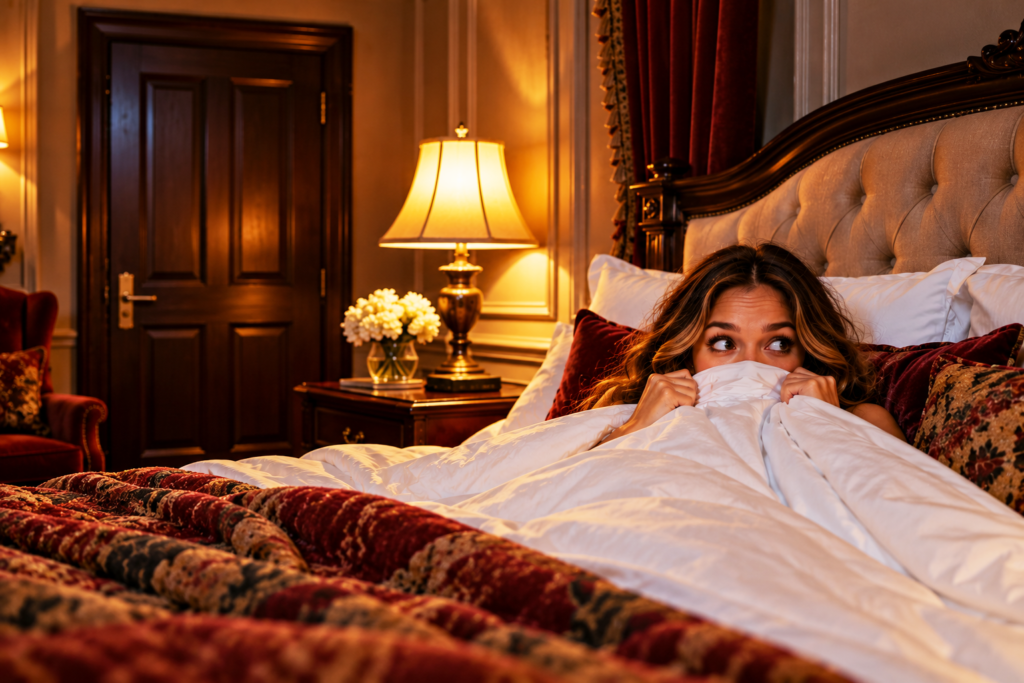
 These historic hotels come with beautiful rooms, fascinating pasts and ghost stories that may—or may not—have you sleeping with the lights on.
There are travelers who choose hotels for the thread count, rooftop pool or breakfast buffet. Then there are people who hear, “Guests have reported seeing a dead hotel owner wandering the hallway,” and immediately ask where they can make a reservation. America has plenty of historic hotels for that second group, complete with grand staircases, creaky corridors and enough ghost stories to make every unexplained noise at 2 a.m. suddenly very interesting. Whether you believe in ghosts or think old plumbing deserves considerably more credit, these places have histories worth checking into.
The 1886 Crescent Hotel in Eureka Springs, Arkansas, doesn’t exactly hide from its spooky reputation. It promotes itself as “America’s Most Haunted Hotel” and offers ghost tours through the property. During the 1930s, the building became a hospital operated by Norman Baker, a notorious medical fraud who claimed he could treat cancer. Hotel lore now includes Michael, a stonemason said to have died during construction, and Theodora, a former patient associated with reports of mysteriously rearranged belongings. The ghost tour even ventures into the old morgue, because apparently sleeping afterward wasn’t challenging enough.
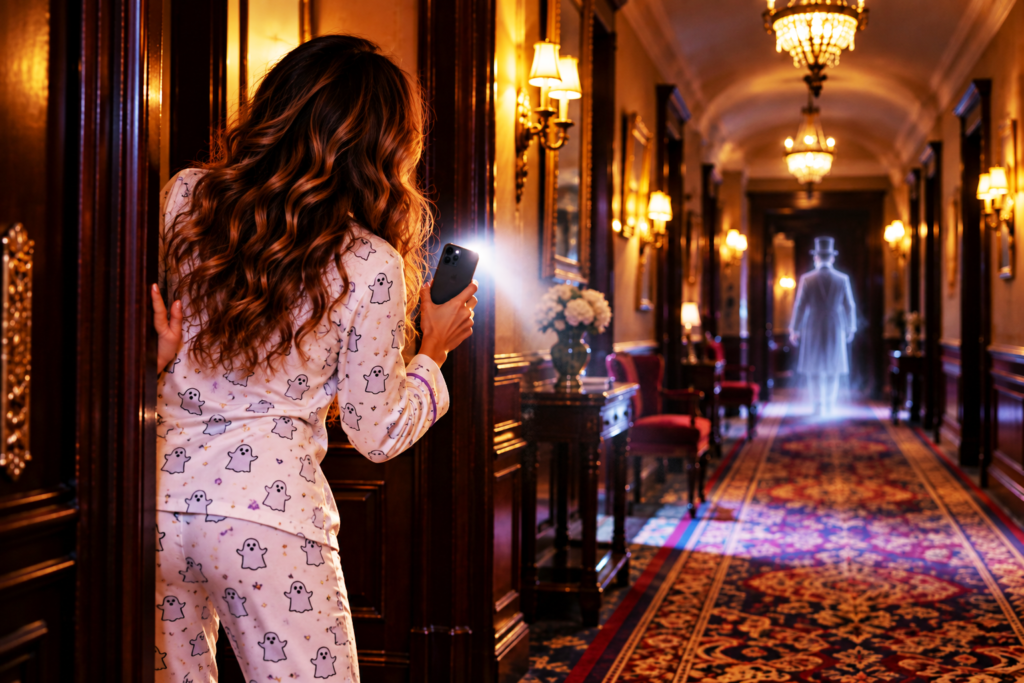 Boston’s Omni Parker House, which opened in 1855, has hosted everyone from Charles Dickens to generations of politicians and celebrities. According to hotel lore, founder Harvey Parker may never have completely checked out. Guests and employees have reported seeing an older mustachioed gentleman wandering the upper floors, with one guest reportedly recognizing her mysterious visitor after later seeing Parker’s portrait. Apparently, even death couldn’t convince this hotelier to stop checking on the guests.
On the opposite coast, California’s enormous red-roofed Hotel del Coronado has overlooked the Pacific since 1888. Its best-known legend centers on Kate Morgan, who checked into the hotel in November 1892 and was found dead several days later. Over the decades, her tragic story became intertwined with reports of flickering lights, unexplained footsteps, doors moving and sightings of a mysterious woman. The hotel now incorporates the history and legends into tours of the property.
At The Marshall House in Savannah, Georgia, the real past is arguably as fascinating as the supernatural stories. Built in 1851, the hotel was used as a hospital during the Civil War. Guests today have reported strange sounds, faucets seemingly turning on by themselves and what sounds like children running through the hallways. In a city already famous for moss-draped trees, historic buildings and ghost tours, staying here feels like fully committing to Savannah.
 Finally, there’s Salem’s Hawthorne Hotel, opened beside Salem Common in 1925. Stories have circulated about unexplained noises, moving objects and mysterious figures, but our favorite tale may be completely ghost-free: in 1990, the hotel held a séance attempting to contact Harry Houdini. He didn’t show.
So, are these hotels actually haunted? We’ll leave that mystery unsolved. Old buildings creak, pipes knock and imaginations become remarkably creative after midnight. But whether that sound outside your door is a Victorian apparition or someone returning from the ice machine, you’re getting one heck of a bedtime story.
Did You Know?
Long before haunted hotels became a Halloween attraction, ghost stories were part of travel itself. Inns, taverns and grand hotels were natural settings for supernatural tales because generations of strangers passed through their doors—sometimes leaving behind stories almost as memorable as the guests themselves.
A Little History:
Many of America’s famously “haunted” hotels date to the 1800s and early 1900s, when grand hotels were important social centers as well as places to sleep. Fires, wars, epidemics, accidents and colorful former guests gradually became part of hotel lore, and as the buildings aged, history and legend often became wonderfully difficult to separate.