Slovenia Has Alps, an Adriatic Coast and Turquoise Rivers—So Why Aren’t You Going?
There’s a little country tucked between Italy, Austria, Hungary and Croatia that somehow still manages to fly under the radar of many American travelers, and that might not last much longer.
The country is Slovenia and the adventures are amazing.
Start in, the wonderfully walkable capital where café tables spill along the Ljubljanica River, bridges connect the old town, and a medieval castle watches from above. It has the beauty of a European capital without the feeling that half the world arrived before you did.
The Soča Valley looks almost unreal, with a river so intensely turquoise it seems someone turned up the saturation. This is Slovenia’s adventure playground—hiking, rafting, kayaking and mountain scenery surrounded by the Julian Alps.
 Underground, things get even more dramatic. Škocjan Caves, a UNESCO World Heritage Site, hides a massive subterranean canyon carved by the Reka River. Trails and bridges lead through enormous chambers that feel more like a movie set than something nature created.
And Slovenia has another underground surprise: you can kayak through the flooded tunnels of a former lead and zinc mine beneath Mount Peca. Yes, underground kayaking in Slovenia is a thing.
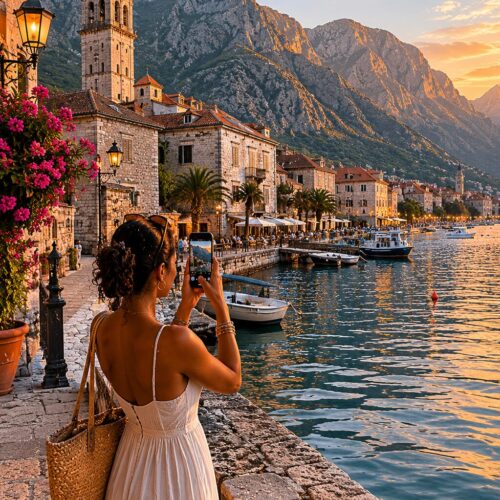
When you’re ready to come back into the sunshine, head toward the Adriatic. Piran is Slovenia’s tiny slice of Mediterranean life—a maze of narrow streets, Venetian architecture, seafood restaurants and waterfront cafés overlooking the sea. Nearby are vineyards, olive groves and centuries-old salt pans.
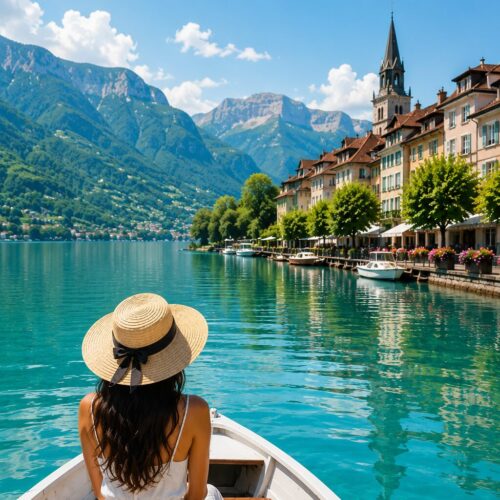
 And because Slovenia is compact, these completely different worlds aren’t separated by days of travel. Of course, there’s Lake Bled, with its famous church-topped island and castle perched over the water. Go. Take the picture. But don’t stop there.
Did You Know?
Slovenia is about the size of New Jersey, yet it packs in the Alps, turquoise rivers, forests, caves, vineyards and even a slice of the Adriatic Sea. You can go from mountain scenery to the Mediterranean coast in just a few hours.
A Little History:
Slovenia sits at a crossroads of Central Europe, where Slavic, Germanic, Italian and Mediterranean influences have met for centuries. For hundreds of years, much of the region was ruled by the Habsburgs and later became part of the Austro-Hungarian Empire. After World War I, Slovenia joined what eventually became Yugoslavia. In 1991, Slovenians voted overwhelmingly for independence, and the country became the independent Republic of Slovenia. It joined both the European Union and NATO in 2004 and adopted the euro in 2007.