 Forget haunted houses. This fall road trip takes us through four Southern cities where cemeteries are filled with art, architecture and some seriously good stories.
There are road trips for barbecue, fall foliage and beaches. But what if we planned one around cemeteries? Before you picture a gloomy tour of headstones, hear us out. Some of America’s historic cemeteries were designed as beautiful landscapes filled with sculpture, gardens, winding paths and elaborate monuments. They also happen to hold hundreds of years of stories.
So, pack the car. We’re heading from Charleston to Savannah, across to Mobile and ending in New Orleans on one unexpectedly beautiful fall road trip.
Charleston, South Carolina
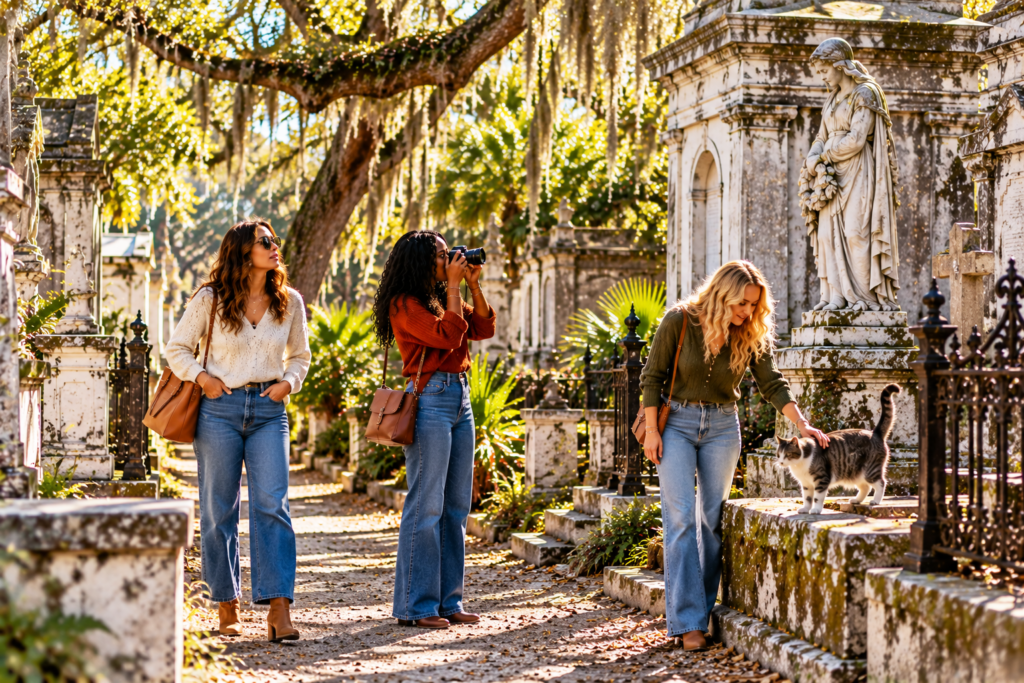
Our first stop is Magnolia Cemetery, chartered in 1850 and designed with winding paths, ponds, landscaped grounds and monumental sculpture. In fact, it became a popular place for walks and day trips during the 19th century.
Walk slowly here. Angels, obelisks, elaborate ironwork and weathered stone turn the cemetery into something closer to an outdoor museum than somewhere designed simply for burial.
 Savannah, Georgia
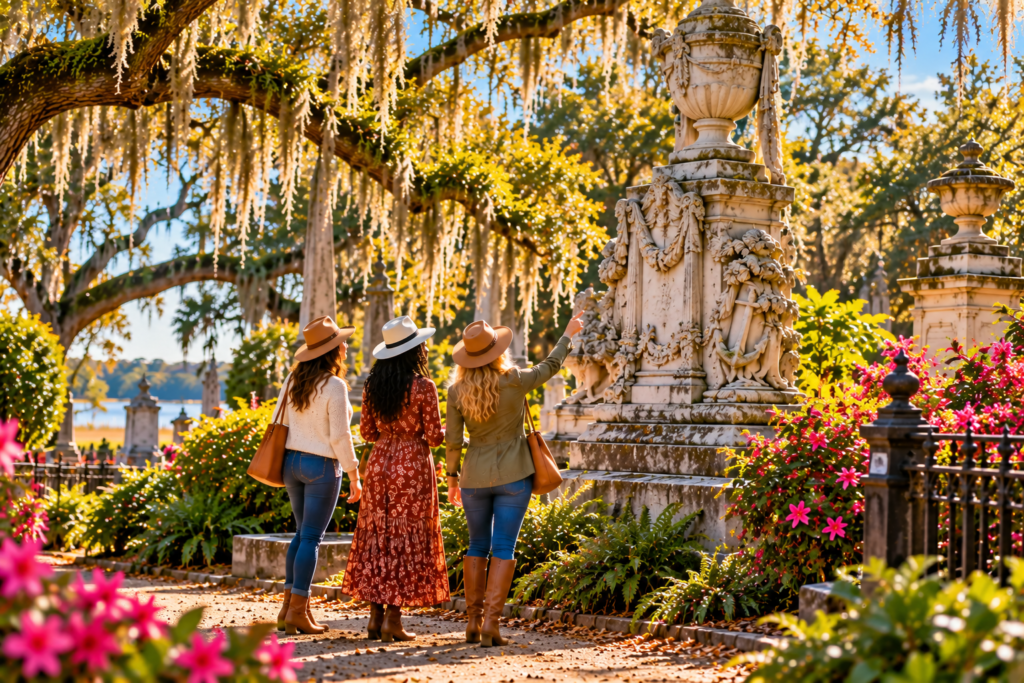
Head south to Savannah and Bonaventure Cemetery, arguably the showstopper of the trip, and set on more than 100 acres overlooking the Wilmington River. Bonaventure was purchased for use as a private cemetery in 1846 and became public in 1907. Tree-lined roads, sculpture and elaborate monuments have made it a destination for visitors for more than 150 years.
And despite Savannah’s famously spooky reputation, the city actually asks visitors not to sensationalize its cemeteries as haunted. Instead, it encourages people to appreciate their history, architecture, scenery and the lives of those buried there.
We like that better anyway.
Mobile, Alabama
Continue west toward Mobile and another Magnolia Cemetery, established in 1836, where cemetery wandering becomes a little like learning a forgotten language. Older gravestones can be covered in symbols: clasped hands, anchors, urns, flowers, lambs and angels. What looks decorative today often carried meaning to the people who originally encountered it.
Instead of simply reading names and dates, start looking at the stones themselves. Suddenly, you’re deciphering messages left behind generations ago.
 New Orleans, Louisiana
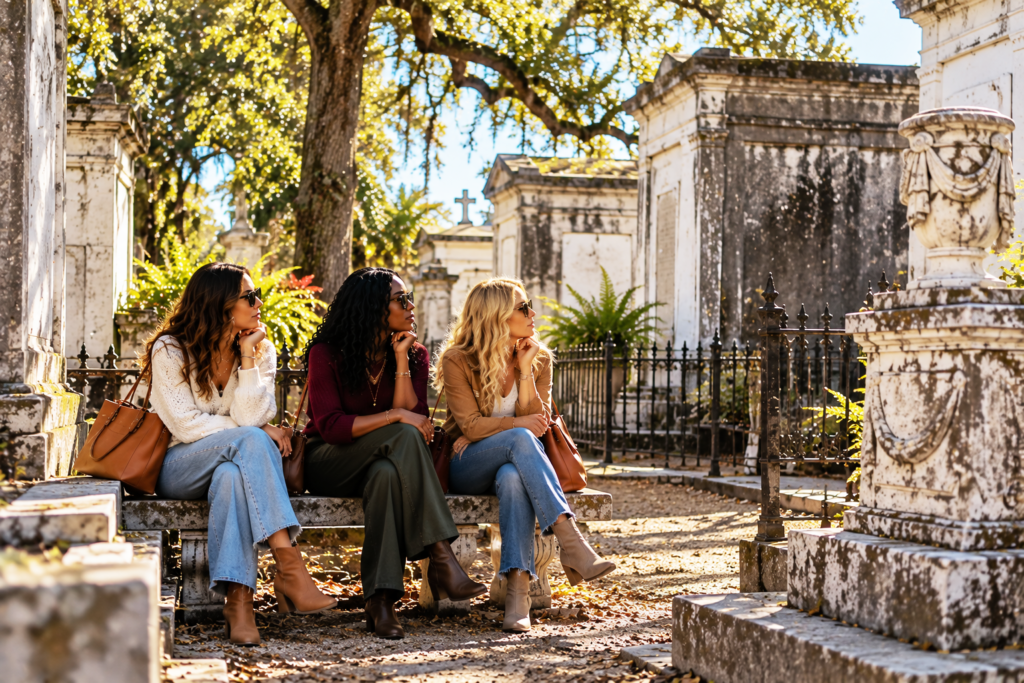
Finish in New Orleans, where cemeteries take on an entirely different appearance. Above-ground tombs create what are sometimes described as miniature cities, with narrow passages running between family vaults. The exact origins of New Orleans’ above-ground burial tradition aren’t completely settled; the National Park Service notes possible influences including the region’s high water table and Spanish colonial traditions.
It is a fitting finale to a trip that proves cemeteries don’t have to be frightening to be fascinating.
Did You Know?
Historic cemeteries weren’t always places people hurried in and out of. America’s 19th-century landscaped cemeteries could also serve as destinations for strolling, contemplation and enjoying nature. Charleston’s Magnolia became popular for walks and outings after its 1850 dedication.
A Little History
The 19th-century “rural cemetery” movement helped transform burial grounds into landscaped spaces outside crowded city centers. Curving paths, trees, water features, sculpture and elaborate monuments made visiting the dead an experience that combined remembrance, art and nature—and helped pave the way for the public parks Americans enjoy today.