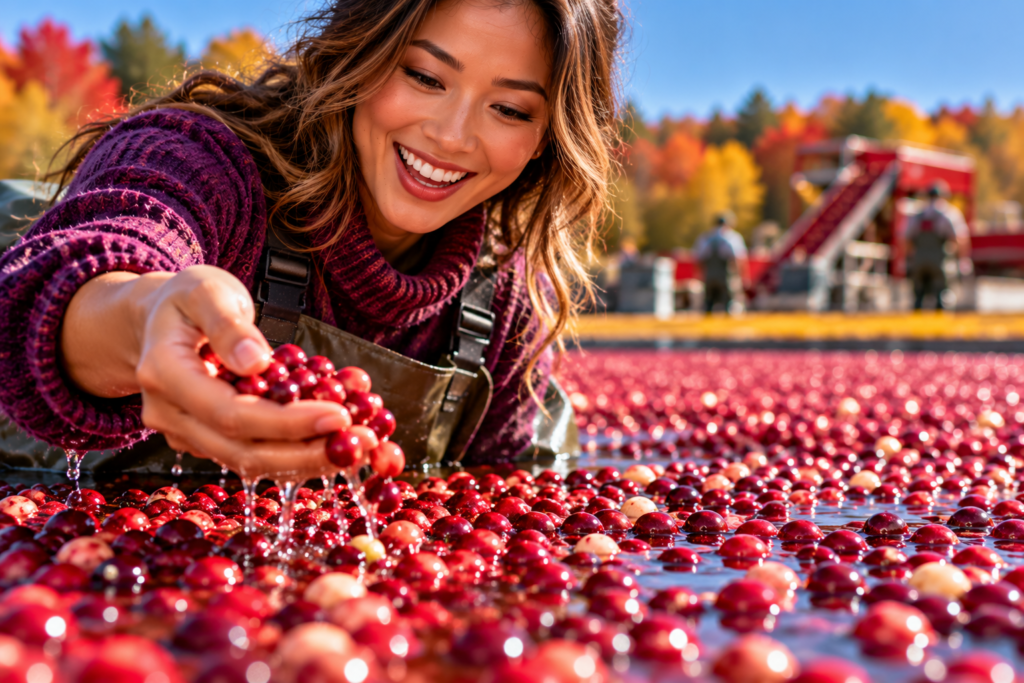
 Those floating seas of red berries aren’t quite what you think. Welcome to one of America’s most unusual fall harvests.
Every fall, something rather spectacular happens in parts of Wisconsin and Massachusetts. Fields appear to turn into enormous crimson lakes, farmers wade through thousands of floating berries and suddenly the humble cranberry looks ready for its own travel documentary. There’s just one problem with the picture most of us have in our heads: cranberries don’t actually grow underwater.
Cranberries grow on low, trailing perennial vines in specially managed sandy beds. For most of the growing season, those beds aren’t submerged at all. The famous flooding happens primarily around harvest time and during certain other stages of production. Once ripe berries are loosened from the vines during a wet harvest, tiny air pockets inside each cranberry allow it to float. Growers can then corral the berries together, creating those enormous pools of brilliant red fruit that have become one of fall’s most photogenic agricultural sights.
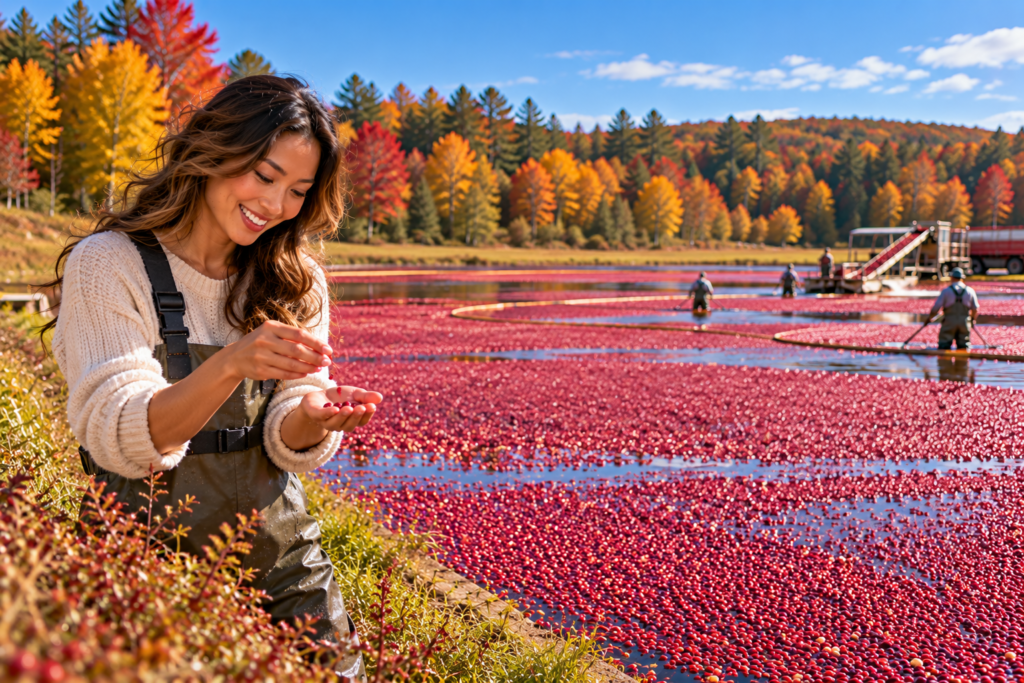 And there are a lot of berries to corral. Wisconsin is America’s cranberry powerhouse, producing more than 60 percent of the country’s crop, while Massachusetts remains one of the nation’s other major growing regions. In Massachusetts, roughly 90 percent of the crop is wet harvested. The bogs are flooded with up to about a foot of water, harvesting equipment loosens the fruit, and the floating berries are gathered and removed for processing.
The cranberry’s story, however, began thousands of years before anyone invented harvesting equipment, cranberries were also used traditionally for other purposes, including medicine and dyes. Commercial cranberry farming came much later.
In 1816, Massachusetts farmer Henry Hall noticed that wild cranberry vines seemed to grow especially well when sand blew across them. He began deliberately adding sand and transplanting vines, helping launch commercial cranberry cultivation on Cape Cod. By the late 1800s, cranberry farming had become an important regional industry.
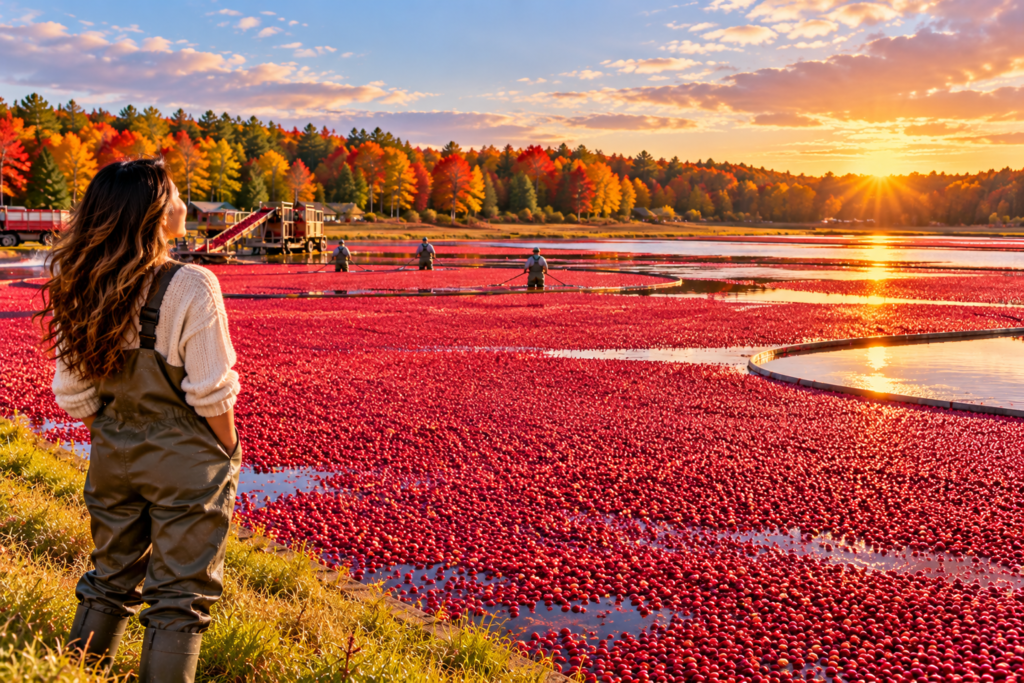 So this October, forget the pumpkin patch for a minute. Find a cranberry-growing region during harvest and you may see something far stranger: millions of bright red berries floating across the landscape like nature dumped an enormous bag of jewels into a pond.
Did you know?
European settlers called it the “craneberry,” reportedly because its delicate flower reminded them of the head and neck of a crane. Somewhere along the way, craneberry became cranberry, and the tiny native fruit eventually became inseparable from American fall.
A little history:
Cranberries are native to North America, and Indigenous peoples harvested the wild fruit long before European settlement. In what is now southeastern Massachusetts, Wampanoag people have gathered wild cranberries for thousands of years, eating them fresh or dried and incorporating them into foods such as pemmican.