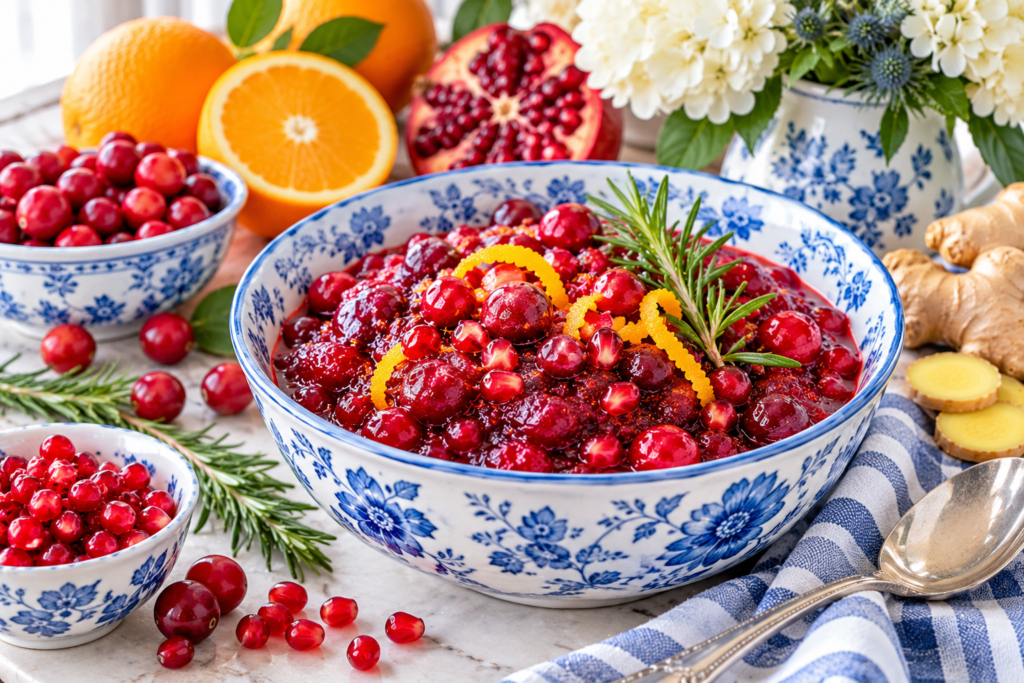
 Skip the Can: Pomegranate, fresh ginger and rosemary turn the humble cranberry into something tart, jewel-bright and just unexpected enough.
There are certain holiday foods people feel very strongly about, and cranberry sauce is one of them. Some families spend hours making it from scratch. Others remain fiercely loyal to the jiggly canned version, complete with those little ridges around the sides. No judgment here.
But if you’re ready to try something different, this Cranberry-Pomegranate Sauce with Ginger & Rosemary might convert a few people.
Cranberry-Pomegranate Sauce with Ginger & Rosemary
Ingredients
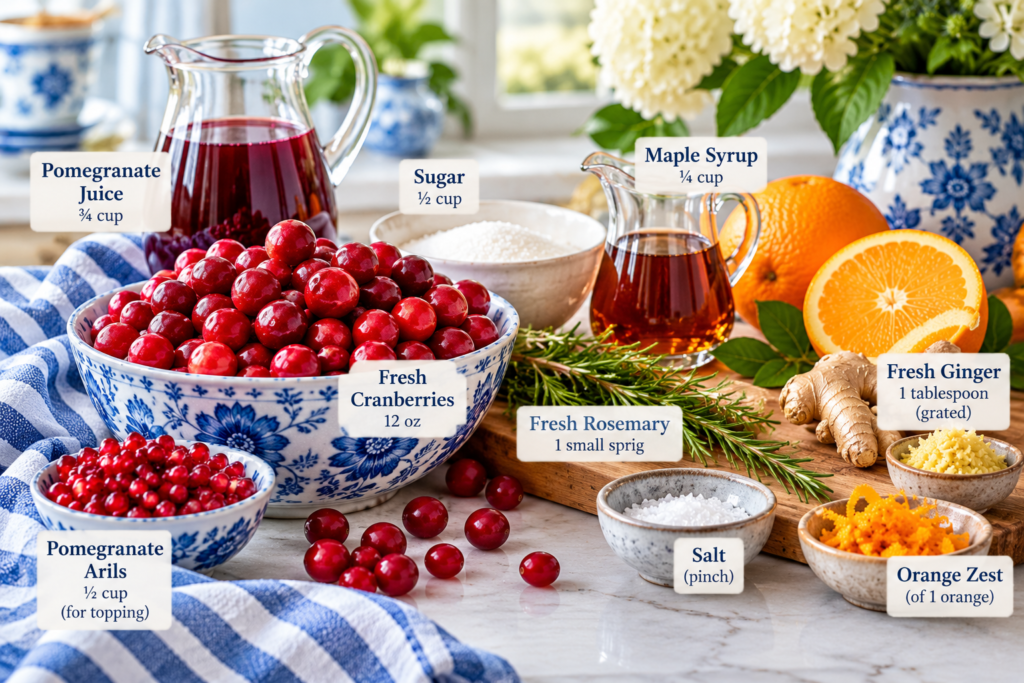
12 ounces fresh cranberries
¾ cup pomegranate juice
½ cup granulated sugar
¼ cup pure maple syrup
1 tablespoon freshly grated ginger
1 small sprig fresh rosemary
Zest of 1 orange
Pinch of salt
½ cup fresh pomegranate arils
 Directions
Add the cranberries, pomegranate juice, sugar, maple syrup, ginger, rosemary, orange zest and salt to a medium saucepan. Bring the mixture to a gentle boil over medium heat, then reduce the heat and simmer for about 10 to 12 minutes.
As the sauce cooks, the cranberries will begin to pop and release their natural pectin, thickening everything into a glossy sauce. Stir occasionally, but don’t worry about crushing every berry. Leaving some whole gives the finished sauce a much prettier texture.
Remove the saucepan from the heat and discard the rosemary sprig. Let the cranberry sauce cool to room temperature, then refrigerate until you’re ready to serve. It will continue to thicken considerably as it cools.
Just before serving, gently fold in most of the fresh pomegranate arils. Spoon the sauce into a pretty serving bowl and scatter the remaining pomegranate seeds over the top. Add a small rosemary sprig and a little curl of orange zest if you’re feeling fancy.
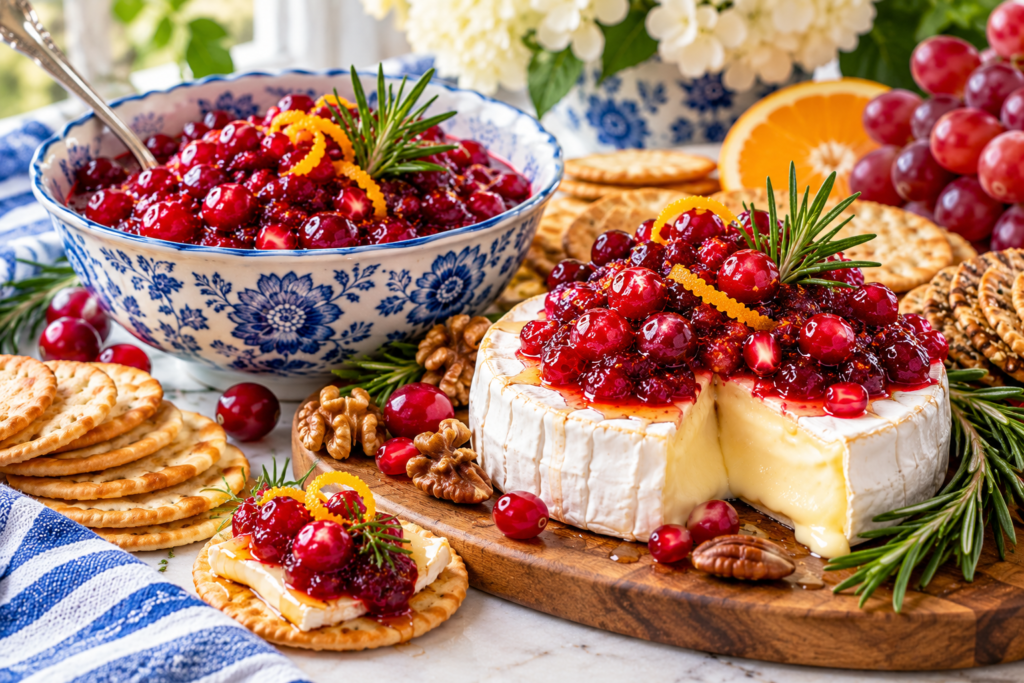 Serve it alongside turkey, chicken or pork, spoon it onto a leftover holiday sandwich, or pair it with Brie and crackers the next day.
Did You Know?
Cranberries contain natural pectin, which is why homemade cranberry sauce thickens as it cools without needing gelatin or cornstarch. That satisfying little “pop” you hear while it cooks is the berry’s skin splitting as the fruit softens.
A Little History
Cranberry sauce has been part of American cooking for centuries. One of the earliest known published American recipes pairing cranberries with turkey appeared in Amelia Simmons’ 1796 cookbook, American Cookery. By the 19th century, cranberry sauce had become increasingly associated with turkey dinners, helping establish the combination that remains a holiday-table tradition today.